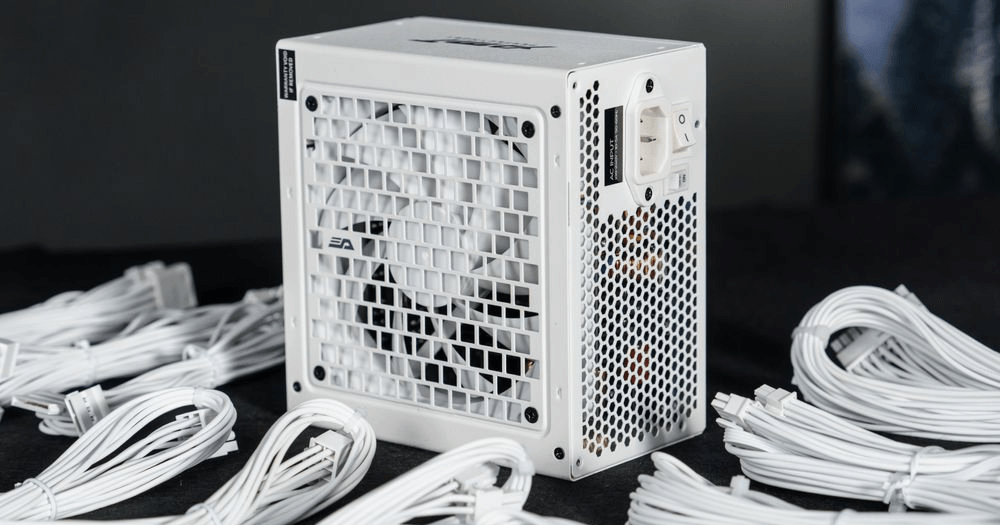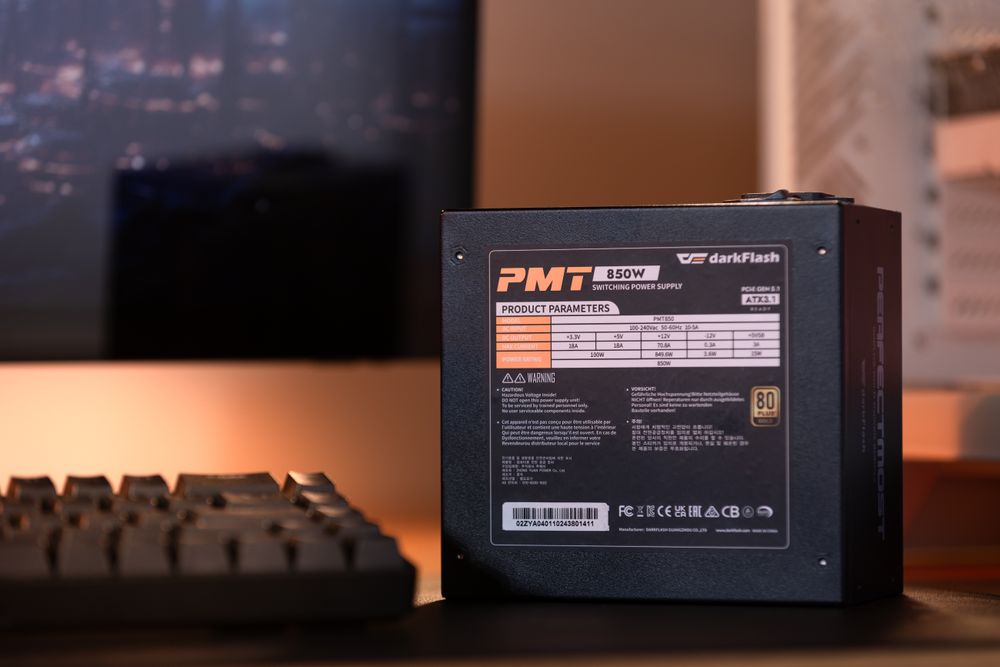
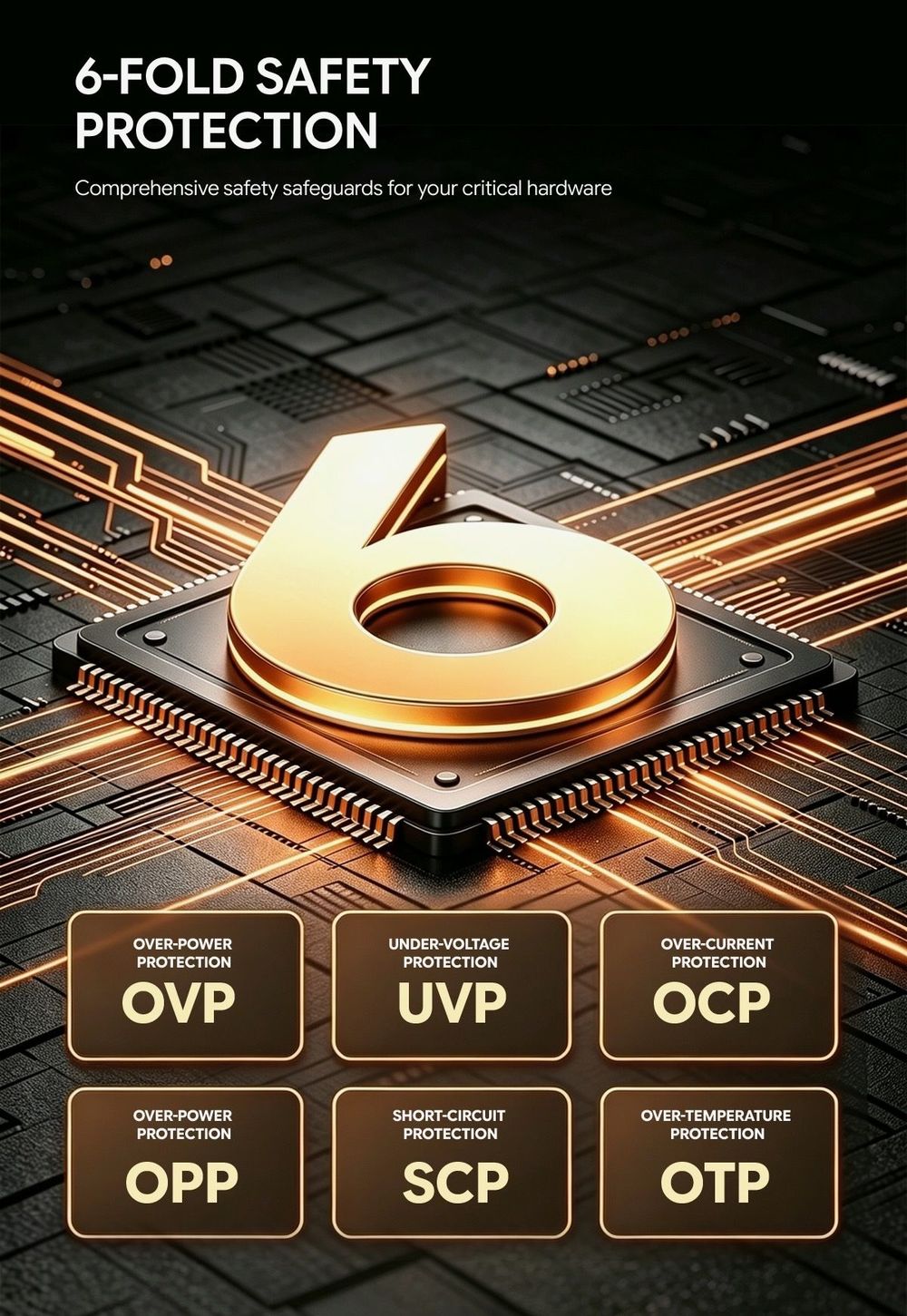
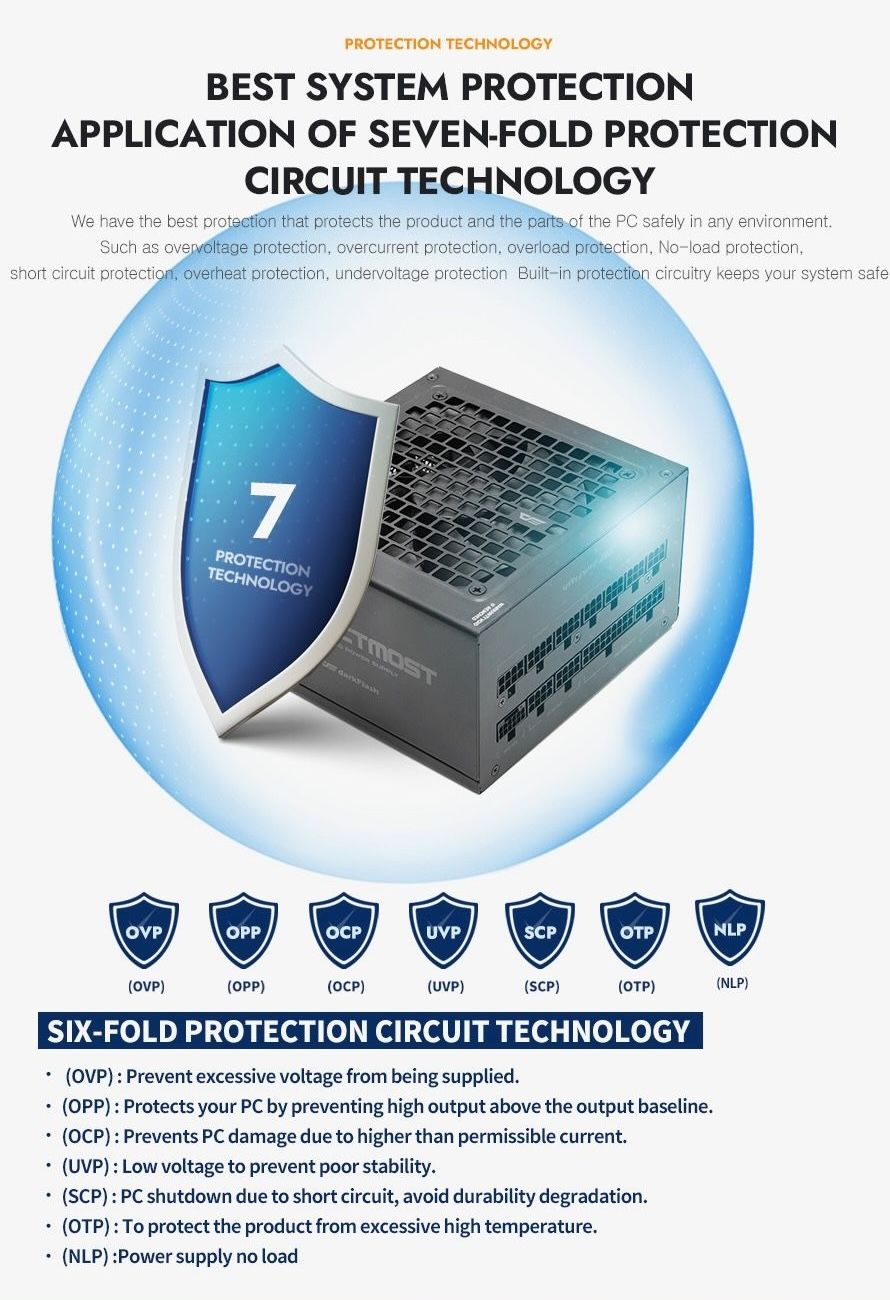
Are PSU protections such as OVP, UVP, OCP, OPP, SCP, OTP, and NLP important? Yes, because they monitor unsafe electrical, thermal, and load conditions and can shut down the power supply before a fault causes more serious damage.
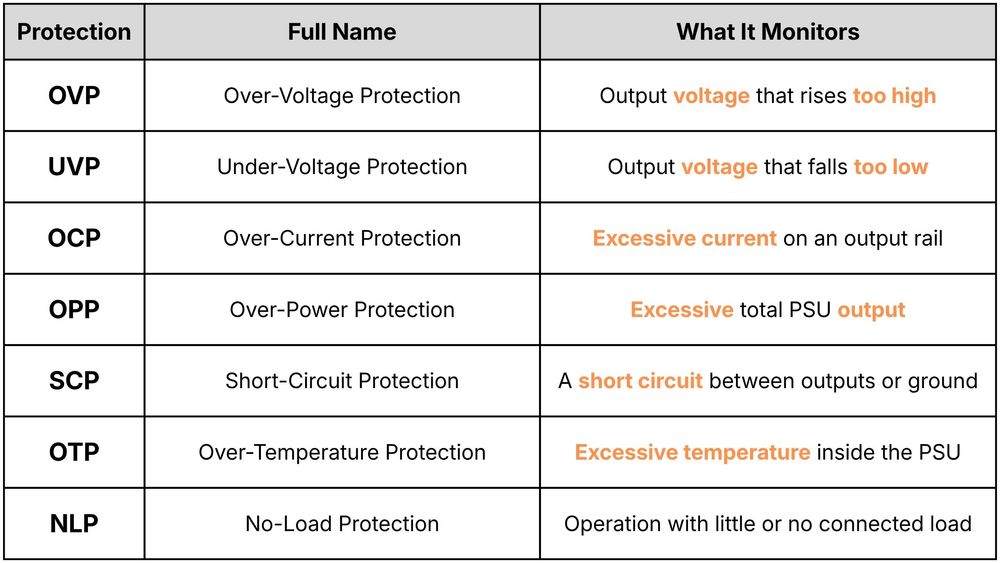
These abbreviations often appear together on a power supply specification sheet, but each protection responds to a different problem. Understanding them makes it easier to compare PSUs beyond wattage and efficiency ratings.
What Do PSU Protection Acronyms Mean?
Power supply protections use monitoring circuits and temperature sensors to watch voltage, current, total output, short circuits, internal heat, and unusual load conditions. When a measured value crosses the manufacturer’s safety threshold, the PSU can limit its output or shut down.
These protections should be checked separately from an efficiency badge. 80 PLUS is an energy-efficiency certification program, while the protection list describes how a PSU responds to abnormal operating conditions.
OVP vs UVP: Power Supply Voltage Protection Explained
OVP
OVP, or Over-Voltage Protection, activates when a PSU’s DC output voltage rises above a defined safety threshold. Excessive voltage on the 12V, 5V, or 3.3V rails can place connected components under electrical stress, so the PSU shuts down when the protection circuit detects an unsafe level.
UVP
UVP, or Under-Voltage Protection, responds when an output voltage falls below its permitted range. Components supplied with insufficient voltage may become unstable, restart, freeze, or stop operating correctly.
OVP monitors the PSU’s output voltage. It does not replace an external surge protector or UPS designed to handle problems coming from the wall outlet.
OCP vs OPP: Current and Total Power Protection
OCP
OCP, or Over-Current Protection, monitors how much electrical current passes through an output rail or circuit. It activates when current exceeds the protection threshold, helping reduce the risk of overloaded cables, connectors, and internal components.
OPP
OPP, or Over-Power Protection, monitors the PSU’s total output. It can shut the unit down when the complete system attempts to draw more power than the PSU can safely provide.
The distinction is simple: OCP responds to excessive current in a monitored output, while OPP responds to excessive total power draw. Their exact trigger points vary between PSU designs and are usually set above normal operating levels so brief, expected GPU power changes do not cause unnecessary shutdowns.
If a PC repeatedly turns off during gaming or rendering, OPP or OCP may be reacting to excessive load, incorrect cabling, a hardware fault, or an unsuitable PSU. Repeated protection trips should be investigated instead of treated as normal operation.
SCP and OTP: Short-Circuit and Overheating Protection
SCP
SCP, or Short-Circuit Protection, reacts when electricity finds an unintended low-resistance path. This can result from a damaged cable, faulty connector, loose conductive object, or failed component. The PSU cuts its output to prevent the fault from continuing through the system.
OTP
OTP, or Over-Temperature Protection, shuts down the PSU when its internal temperature reaches a preset limit. Possible causes include sustained overload, blocked ventilation, heavy dust buildup, excessive ambient temperature, or a failed cooling fan.
Intel’s power-supply design guidance defines both short-circuit shutdown and temperature-triggered shutdown as important protective behavior. After either protection activates, turn the computer off and inspect its external cables, ventilation, filters, and system load. Never open the PSU enclosure, because hazardous voltage can remain inside.
What Is NLP? No-Load Protection Explained
NLP
NLP, commonly called No-Load Protection and listed by darkFlash as Zero Load (NLP), covers situations where the power supply has little or no load connected to its DC outputs. Under this unusual condition, the PSU must remain electrically stable and avoid damage or hazardous behavior.
Intel’s power-supply design guidance states that a PSU should not become damaged or create a hazard when all DC output connectors are disconnected. Depending on the design, the power supply may continue operating safely or enter a shutdown state.
NLP should not be confused with zero RPM mode. NLP concerns electrical operation when there is no meaningful output load, while zero RPM mode simply stops the cooling fan when temperature and power demand are low.
The darkFlash PMT Series specifically lists Zero Load Protection alongside OVP, UVP, OCP, OPP, SCP, and OTP.
Final Thoughts: How to Choose a PSU With Proper Protections
A good PSU specification should clearly list OVP, UVP, OCP, OPP, SCP, OTP, and, where supported, NLP. These protections work together because no single circuit can cover every electrical or thermal fault. Correct wattage, stable voltage regulation, appropriate cables, component quality, warranty coverage, and independent testing also remain important.
The global darkFlash power supply lineup includes several product tiers with comprehensive protection features. The darkFlash PMT Series combines all seven protections with an ATX 3.1 design, full modular cabling, DC-to-DC conversion, and 80 PLUS Gold certification.
Protection features are designed for abnormal conditions, so they should remain a final safety layer rather than a feature the system regularly triggers. Choose enough capacity for the hardware, use only compatible power cables, and investigate repeated shutdowns promptly.