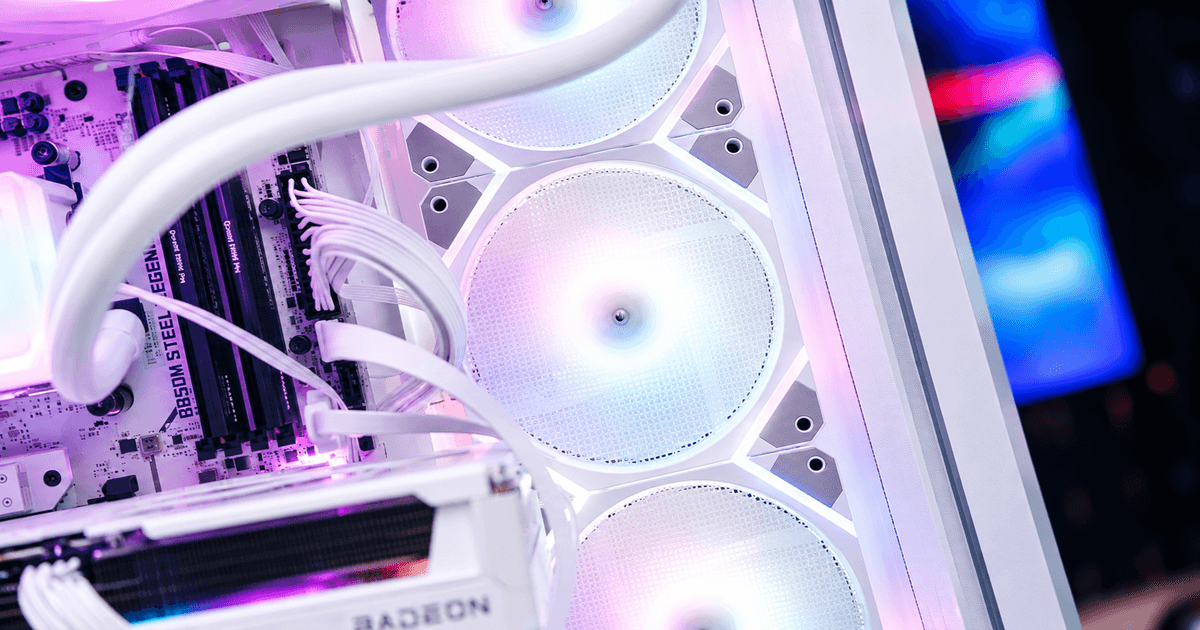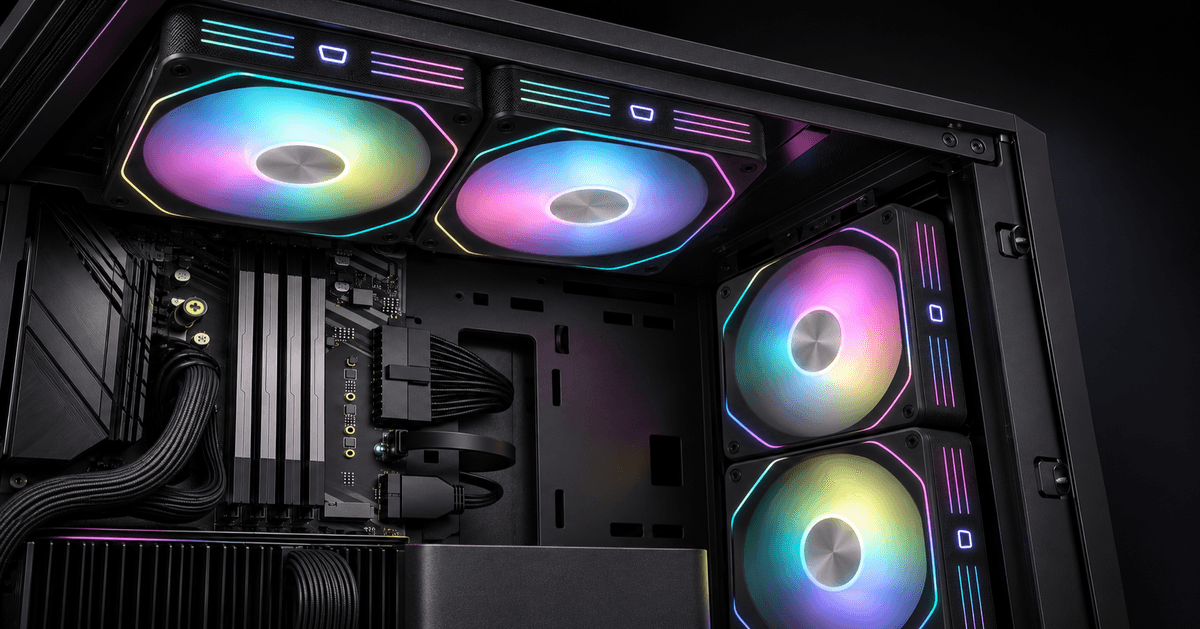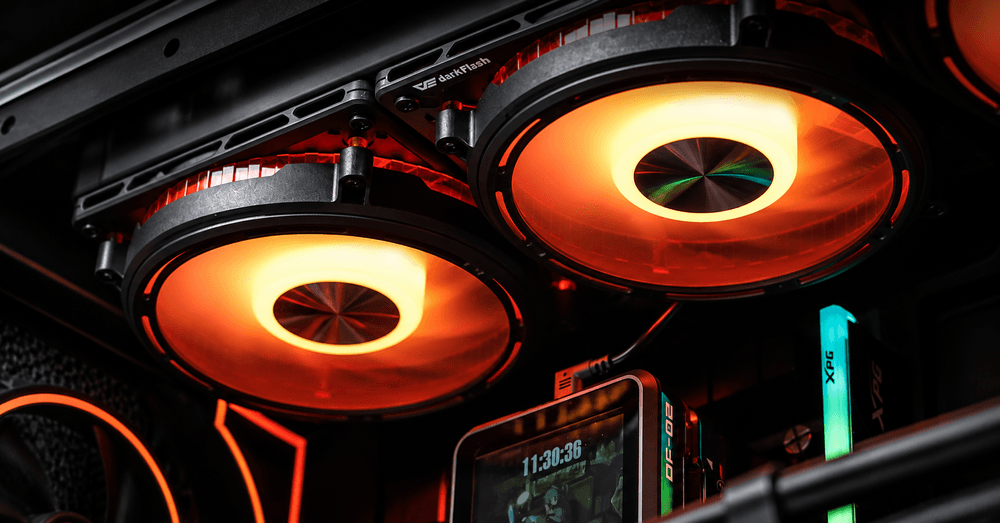
Standard and reverse-blade fans can both move air through your PC effectively.
The main difference is not simply cooling performance. It is which side of the fan remains visible while creating the airflow direction you need.
This matters most in panoramic and showcase PC cases, where side and bottom fans are clearly visible through the glass.
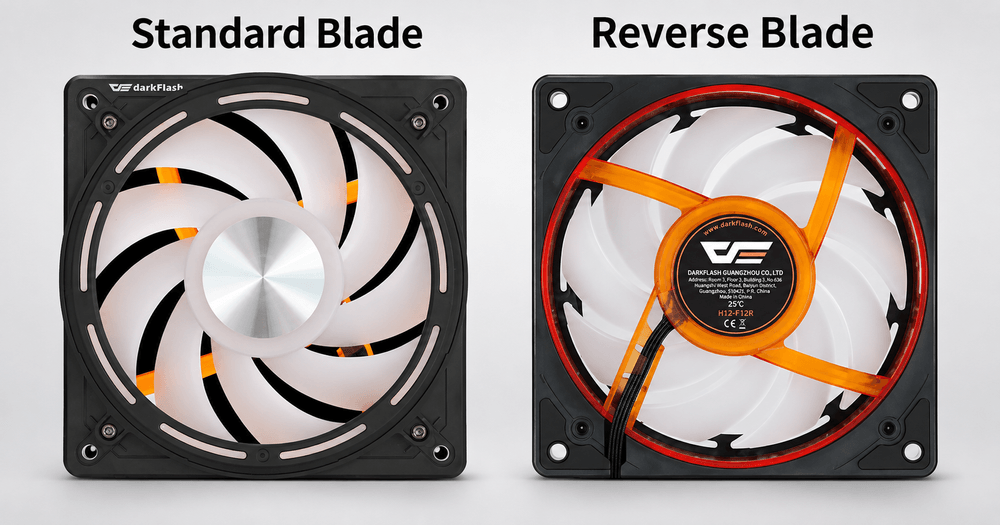
What Is the Difference?
A typical standard fan usually pulls air through the open side and pushes it out through the side with the support frame.
Because of this, standard fans are commonly used for:
Top exhaust
Rear exhaust
They can also be used as intake fans, but the support frame may face the inside of the case.
A reverse-blade fan changes the blade design so airflow moves in the opposite direction relative to the visible side.
This allows the cleaner-looking side of the fan to face the inside of the PC while still working as an intake.
That makes reverse-blade fans especially useful for:
Side intake
Bottom intake
These positions are common in panoramic and dual-chamber cases.
Do Reverse-Blade Fans Cool Better?
Not automatically.
Reverse-blade fans are mainly designed to solve an appearance and airflow-direction problem, not to guarantee better cooling.
Actual fan performance still depends on:
Airflow
Static pressure
Fan speed
Noise
Dust filters
Radiators
Case airflow restrictions
If you are comparing two fans, check their actual specifications instead of assuming the reverse-blade model performs better.
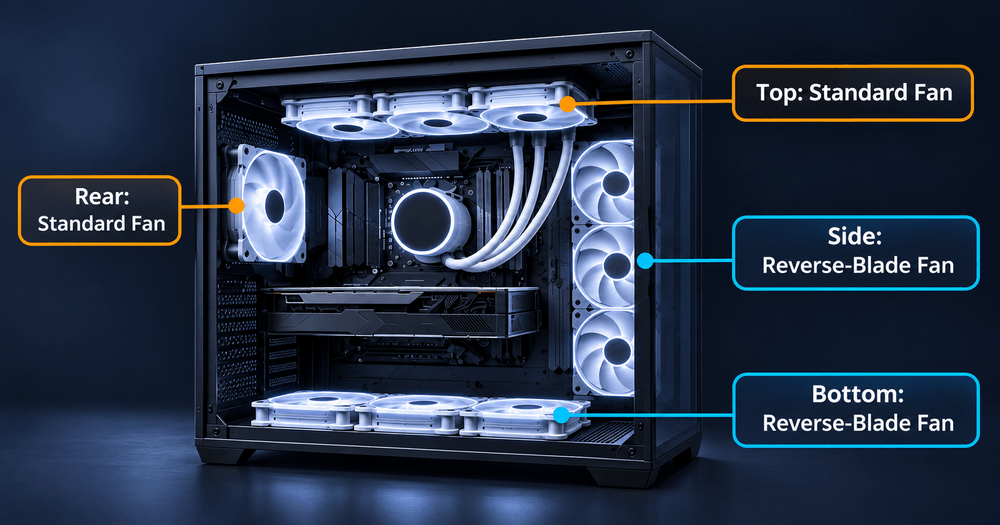
A common showcase layout — actual fan direction should follow your case airflow plan.
Where Should You Use Each Type?
For many showcase builds, a simple layout might be:
Reverse-blade fans
Side intake
Bottom intake
Standard fans
Top exhaust
Rear exhaust
This lets fresh air enter through visible intake positions while warm air leaves through the top and rear of the case.
However, the final layout should always match the airflow design of your specific case.
How Do You Check Airflow Direction?
Do not rely only on the appearance of the fan blades.
If the fan frame includes an airflow-direction arrow, use that as your primary reference.
Otherwise, check the product specifications or manual before installation.
This is especially important when standard and reverse-blade fans are mixed in the same build.
Which One Should You Choose?
Choose standard fans if you mainly need top or rear exhaust, or if the rear support frame will not be visible.
Choose reverse-blade fans if you need side or bottom intake and want the cleaner side of the fan facing the interior.
Neither type is universally better.
The correct choice is:
Airflow direction first → Appearance second.
Plan where your system needs intake and exhaust airflow, then choose the fan design that gives you the look you want without changing that airflow plan.