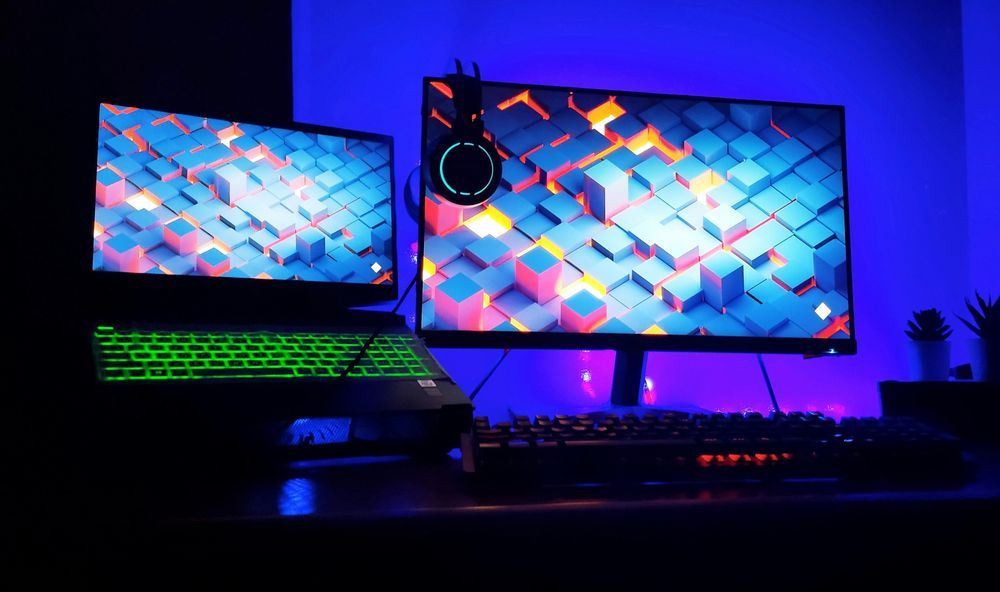
Gaming laptops have never been more powerful. In 2026, high-end models offer fast processors, RTX 50-series laptop GPUs, high-refresh OLED displays, and enough performance to handle demanding AAA games.But there is one problem: you are paying a serious premium for portability.
If you need one computer for gaming, school, work, and travel, a gaming laptop can absolutely make sense. But if most of your gaming happens at the same desk, a desktop PC still offers better performance, cooling, customization, and long-term value. So, gaming laptop or desktop PC—which one should you buy in 2026?
Why Gaming Laptops Cost More in 2026
A gaming laptop is much more than a compact desktop.
Manufacturers have to fit the CPU, GPU, motherboard, memory, storage, cooling system, battery, keyboard, speakers, display, and power delivery into a chassis only a few centimeters thick.
That engineering comes at a cost.
Premium gaming laptops in 2026 increasingly feature OLED displays, high-refresh panels, RTX 50-series laptop GPUs, 32GB or even 64GB of memory, sophisticated cooling systems, and premium aluminum chassis designs.
The result can be an incredibly capable portable gaming machine—but also an expensive one.
When you buy a premium gaming laptop, you are not simply paying for FPS.
You are paying for performance + display + battery + portability + compact engineering in one device.
For someone who travels frequently, works remotely, or moves between school, home, and the office, that can be worth every dollar.
For a gamer who leaves the computer on the same desk every day, it becomes much harder to justify.
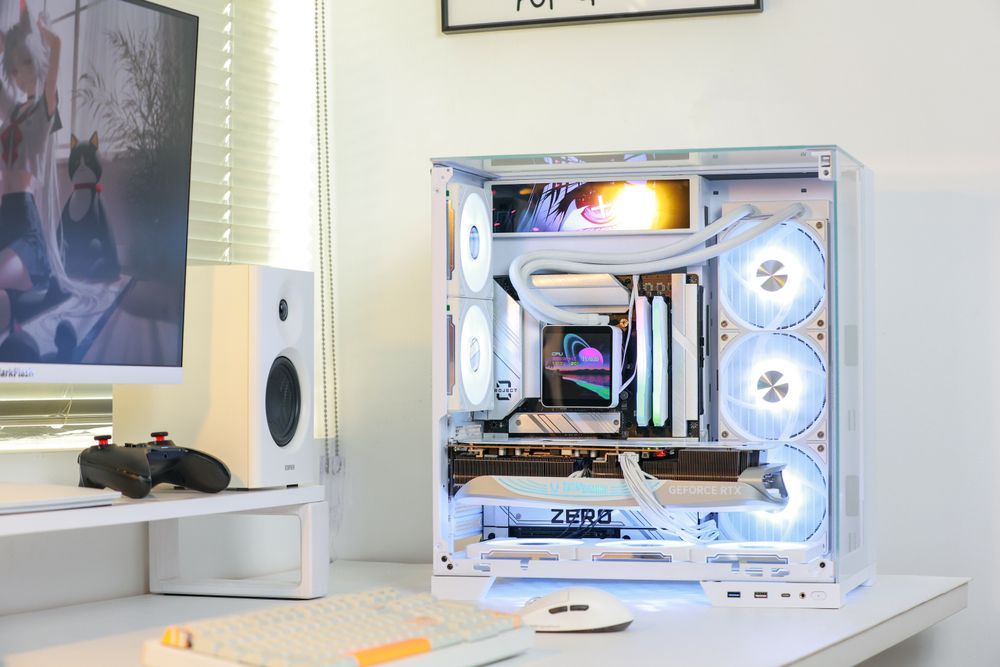
Desktop PCs Put More of Your Budget Into Performance
Desktop PCs take a different approach.
Instead of spending part of your budget on a battery, integrated display, compact cooling system, and ultra-thin chassis, more of your money can go directly toward the components that affect performance.
That means your budget can be focused on:
A stronger graphics card
A faster processor
More RAM
Better cooling
A higher-quality power supply
More storage
A better monitor
Better peripherals
And unlike a laptop, you don't have to buy everything at once.
You can start with the components that matter most and upgrade the rest later.
Cooling Is Still a Major Desktop Advantage
Performance is not only about what CPU or GPU you have.
It is also about how effectively those components can stay cool.
Gaming laptops operate within extremely limited physical space. Their cooling systems have improved dramatically, but they still have to move heat away from powerful components inside a thin chassis.
Desktop PCs have far more room to work with.
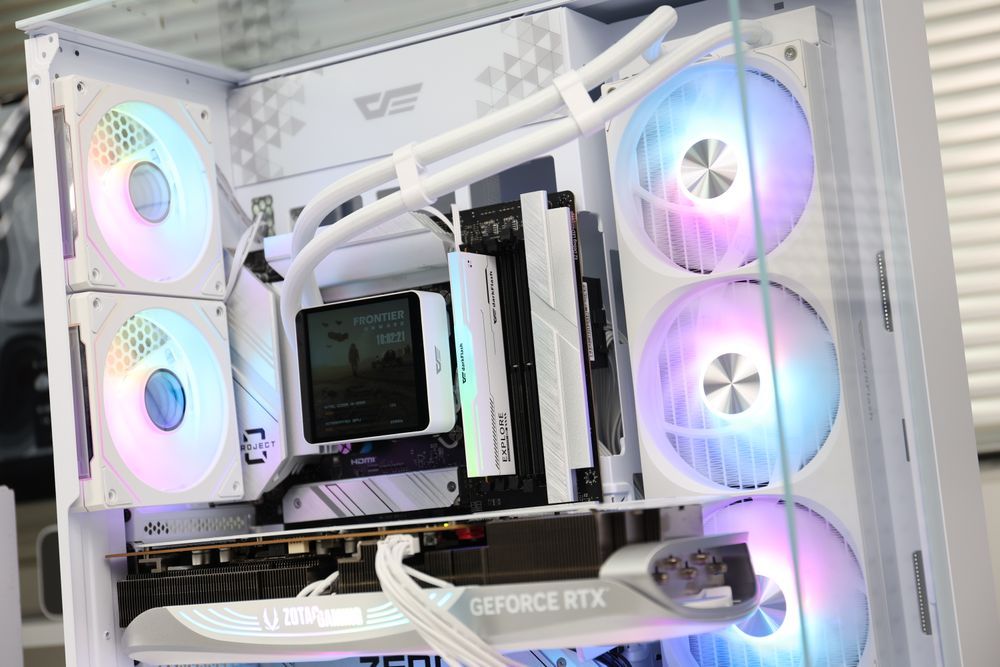
A well-designed PC case can support larger intake and exhaust fans, tower air coolers, 240mm or 360mm AIO liquid coolers, full-size graphics cards, and significantly larger airflow paths.
This gives builders much more control over both temperature and noise.
Instead of forcing every component into the smallest possible space, a desktop allows the entire system to be designed around airflow.
And when you're building a PC intended to last for years, good cooling is part of the investment.
Upgradeability Changes the Value Equation
This is where desktops have one of their biggest advantages.
When a gaming laptop starts feeling slow, your upgrade options are usually limited. Storage can often be upgraded, and some models still allow memory upgrades, but the CPU and GPU are generally fixed.
A desktop is different.
Need more gaming performance?
Upgrade the GPU.
Need more memory?
Add or replace RAM.
Running out of storage?
Install another SSD.
Need better temperatures?
Upgrade the CPU cooler, add more fans, or move the system into a higher-airflow case.
Need more power for your next GPU?
Replace the PSU.
You don't necessarily need to replace the entire computer.
That flexibility can dramatically improve the long-term value of a desktop PC.

The Desktop Doesn't Have to Be Huge Anymore
One traditional advantage of laptops is space.
But modern desktop PCs are becoming much more flexible.
ATX systems remain popular for builders who want maximum expansion and cooling, while Micro-ATX and Mini-ITX builds can deliver serious gaming performance in significantly smaller footprints.
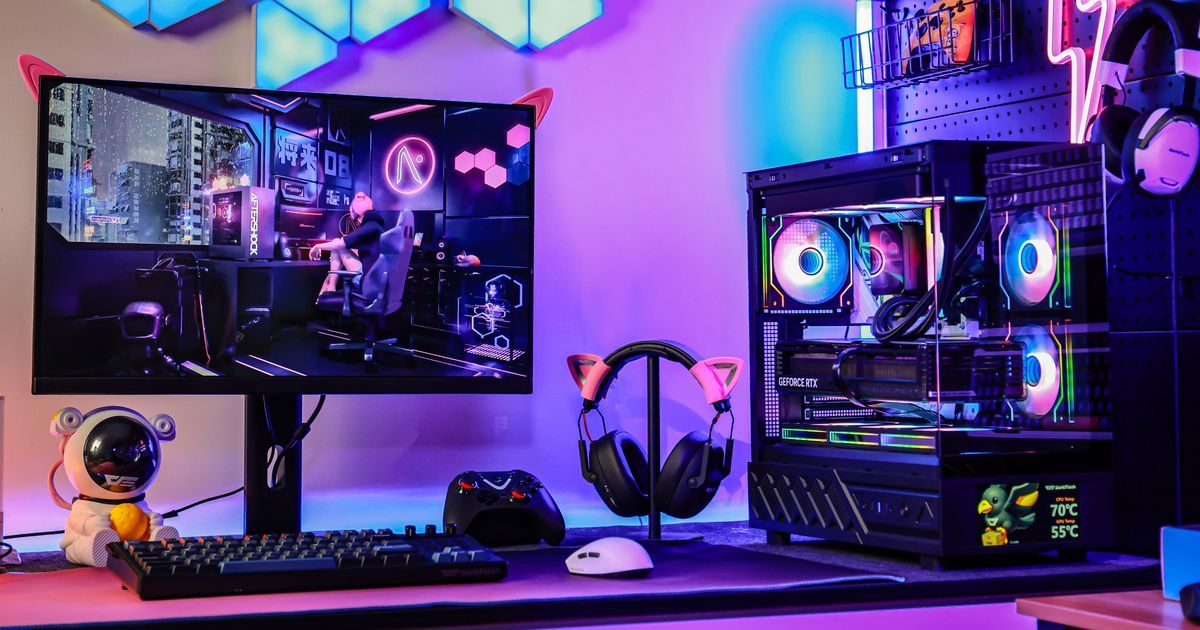
Modern panoramic and compact PC cases also make it possible to build systems that feel more like part of your desk setup rather than a giant box sitting next to it.
That means choosing a desktop no longer automatically means sacrificing half your desk.
When a Gaming Laptop Makes More Sense
A gaming laptop is still the better choice when portability is genuinely part of your lifestyle.
Consider a gaming laptop if you:
Travel frequently
Live in a dorm or very small apartment
Need the same computer for school and gaming
Regularly work from different locations
Don't want to buy a separate monitor and keyboard
Need your gaming system to fit inside a backpack
In these situations, portability isn't just a bonus.
It's part of the product you're paying for.
And that's where gaming laptops shine.
When a Desktop Gaming PC Makes More Sense
Choose a desktop if your PC spends most of its life in one place.
A desktop is particularly attractive if you:
Want maximum gaming performance for your budget
Plan to upgrade your GPU later
Care about temperatures and noise
Want more storage and connectivity
Enjoy customizing your setup
Want your PC to remain useful through multiple upgrade cycles
The initial setup may require more components, but the system becomes something you can continuously improve rather than completely replace.
Don't Forget the Cost of the Full Setup
There is one area where laptop comparisons can be misleading.
A gaming laptop already includes a display, keyboard, trackpad, speakers, Wi-Fi, and battery.
A desktop doesn't.
If you're starting completely from zero, remember to include the cost of a monitor, keyboard, mouse, and potentially speakers or a headset when comparing your budget.
However, peripherals usually survive multiple PC upgrades.
Your monitor might stay on your desk through two or three GPU generations. The same can be true for your keyboard, mouse, PC case, cooling fans, and even your power supply.
That is another reason why desktop ownership can become more cost-effective over time.
Gaming Laptop vs Desktop: Which Is Better Value in 2026?
There isn't one answer for everyone.
If you need portability, a gaming laptop offers an impressive amount of performance in an incredibly compact package.
But if portability isn't important, the desktop PC remains difficult to beat.
You get more freedom to choose where your money goes, more control over cooling, more upgrade options, and a system that can evolve with you.
Instead of replacing the entire machine when you want more performance, you can upgrade exactly what you need.
Build a PC That Can Grow With You
A good desktop PC isn't defined by one component.
It's an ecosystem.
Your GPU provides the gaming performance, but your case determines airflow and expansion possibilities. Your cooling solution keeps the CPU performing consistently. Your PSU provides the foundation for current and future hardware, while fans and peripherals complete the experience.
That's why choosing the right foundation matters.
At darkFlash, we design PC cases, power supplies, AIO liquid coolers, air coolers, cooling fans, memory, keyboards, mice, and monitors for builders who want more freedom to create, customize, and upgrade their setups.
Build it your way. Upgrade it when you want. Keep it for longer.
If portability isn't essential, a desktop PC is still one of the smartest ways to build a gaming setup in 2026.