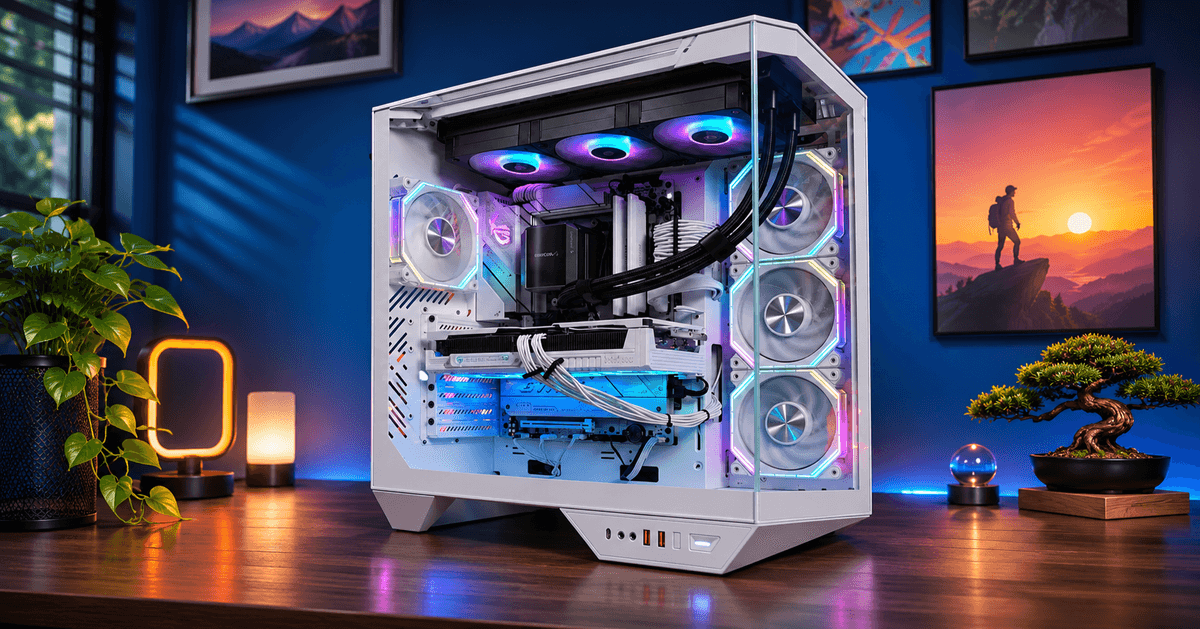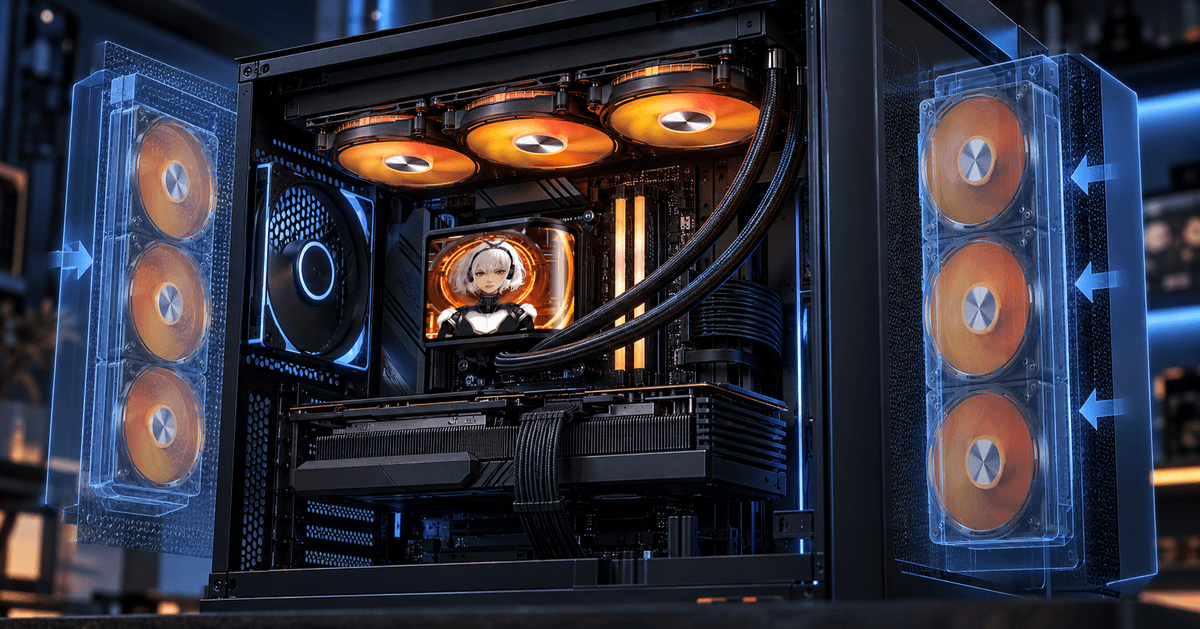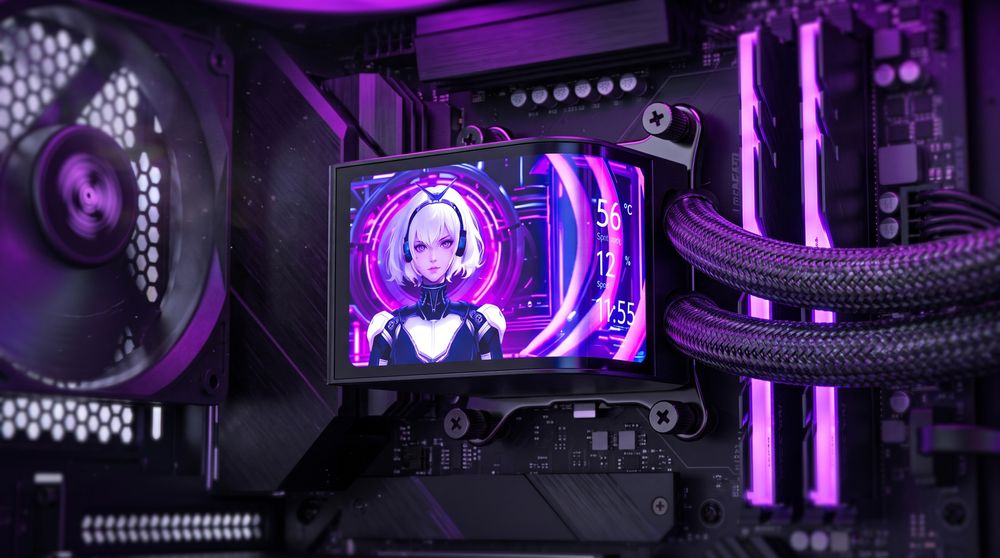
Premium AIO coolers can add value in different ways, from display features to customization and cleaner visual integration. Curved OLED displays take that idea a step further.
At first glance, the difference may seem mostly visual. But the value of a curved OLED display comes from how it becomes part of the product itself—and how that changes the overall PC build experience.
More Freedom in Product Design
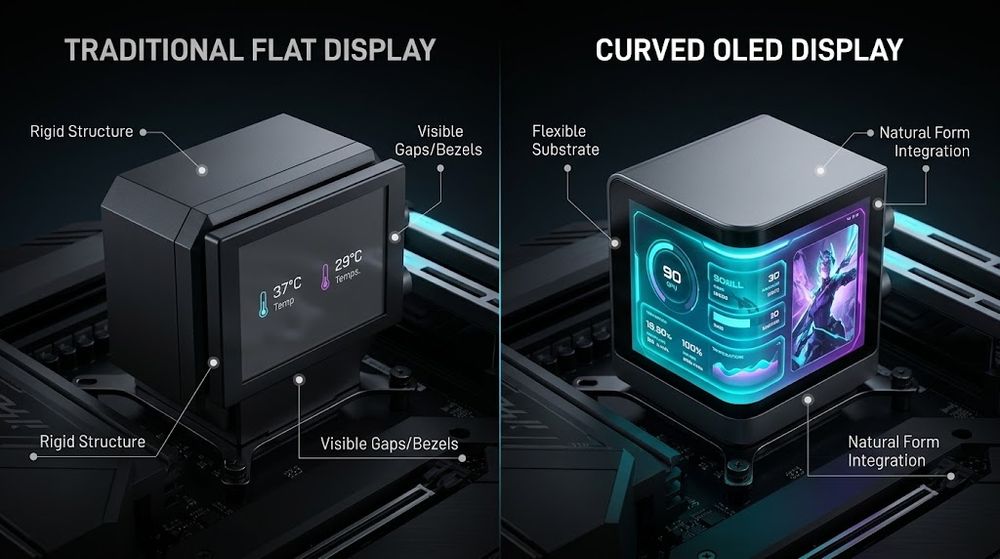
Traditional LCD panels usually rely on a backlight and a relatively rigid structure.
OLED pixels produce their own light and can be manufactured on flexible substrates, giving designers more freedom to create curved shapes.
Instead of placing a flat screen onto a product, the display can follow the form of the product more naturally.
Better Integration With the Product
A curved display often requires the screen, housing, and internal structure to be designed together.
This makes the display feel less like an extra component and more like part of the product itself.
In PC hardware, this is especially relevant because panoramic and tempered-glass cases make internal components highly visible. The display can become part of the overall visual design rather than simply a screen for showing temperatures.
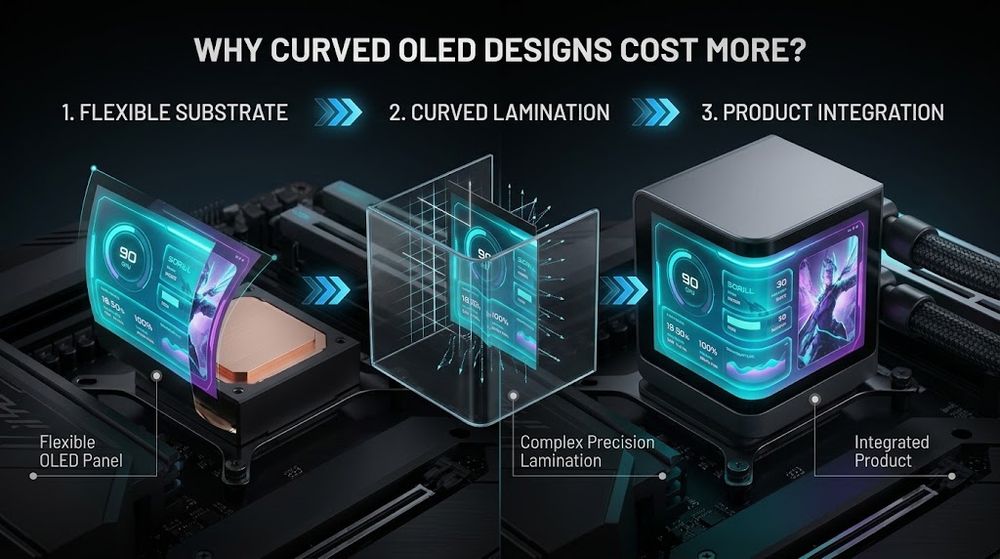
Why Can Curved OLED Designs Cost More?
This greater design flexibility also brings more manufacturing complexity.
Curved OLED products may require flexible substrates, more complex lamination, customized housing, structural support, tighter manufacturing tolerances, and additional quality control.
So the higher price is not simply because the screen is curved. Part of the cost reflects the engineering required to integrate the display into the product itself.
More Value for Showcase and Custom Builds
For users who care about PC aesthetics, a curved display can do more than show information.
It can also become a visual focal point inside the system, showing system data, custom artwork, GIFs, animations, or themed graphics in a format that feels more integrated with the cooler itself.
The darkFlash UV360 follows this idea by integrating a 6.67-inch 2K curved OLED display directly into the cooler.
For panoramic, RGB, themed, or showcase-style PCs, that kind of integration can help bring the entire build together.
More Than a Visual Detail
A curved OLED display does not automatically improve cooling performance. Its value comes from a different place.
It adds design flexibility, deeper product integration, and a stronger visual identity to the build.
The real question is not simply whether curved OLED is better than a flat display.
It is whether that added design and customization value matters to the way you want your PC to look and feel.