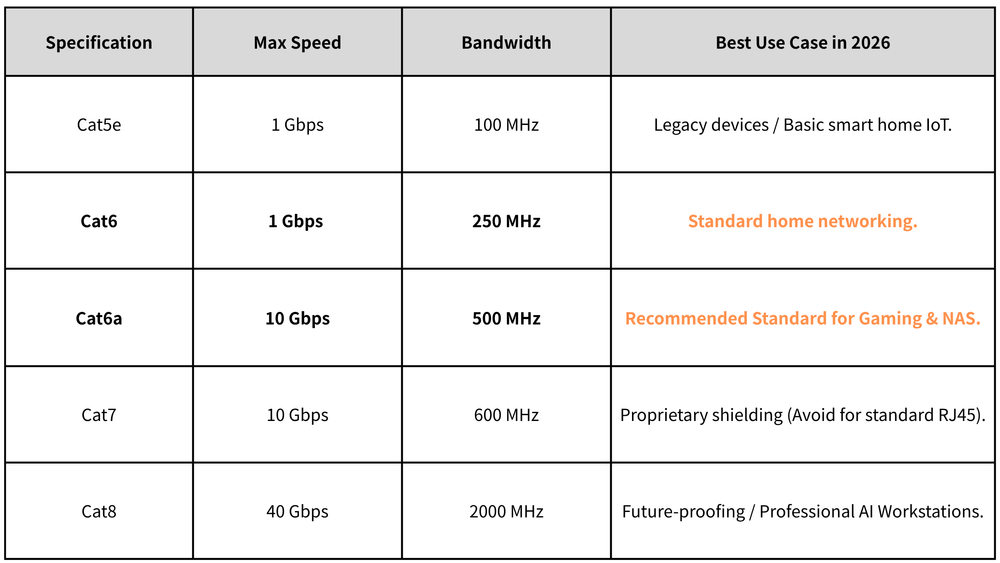
What is the difference between Cat5e, Cat6, and Cat8 in 2026? The primary differences lie in Bandwidth (MHz) and Data Transfer Speed (Gbps).
While a standard Cat5e cable is limited to 1Gbps and is prone to interference, Cat6a and Cat8 cables utilize superior shielding to support 10Gbps to 40Gbps speeds. In 2026, as high-speed AI data transfers and 4K cloud gaming become the norm, using a cable below Cat6a creates a physical bottleneck, preventing your high-end PC hardware from reaching its full network potential.
The Ethernet Evolution: Cat5e to Cat8 Comparison
In 2026, we categorize ethernet cables not just by speed, but by their ability to resist Crosstalk (Interference) in a home filled with wireless signals.
Cat5e vs. Cat6a: The "Bandwidth Gap"
Many users assume that since their ISP only provides 1Gbps, a Cat5e cable is enough. This is a common misconception in 2026:
Signal Integrity: Cat6a (Augmented) features a thicker copper core and better internal twisting, which reduces signal errors. In gaming, this translates to lower Jitter and more stable ping.
10GbE Readiness: Most 2026 motherboards now support 2.5G or 10G LAN. A Cat5e cable will physically cap these ports at 1Gbps, wasting your hardware's potential.
The Shielding Secret: UTP vs. STP
When buying a cable in 2026, the letters on the jacket matter as much as the "Cat" rating:
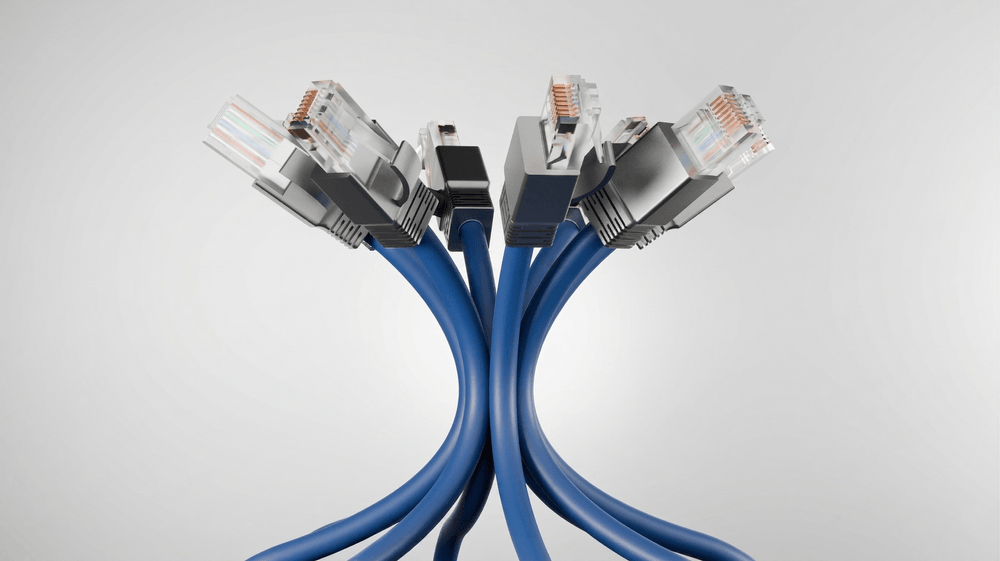
UTP (Unshielded Twisted Pair): Common and flexible, but vulnerable to electromagnetic interference (EMI) from power cables.
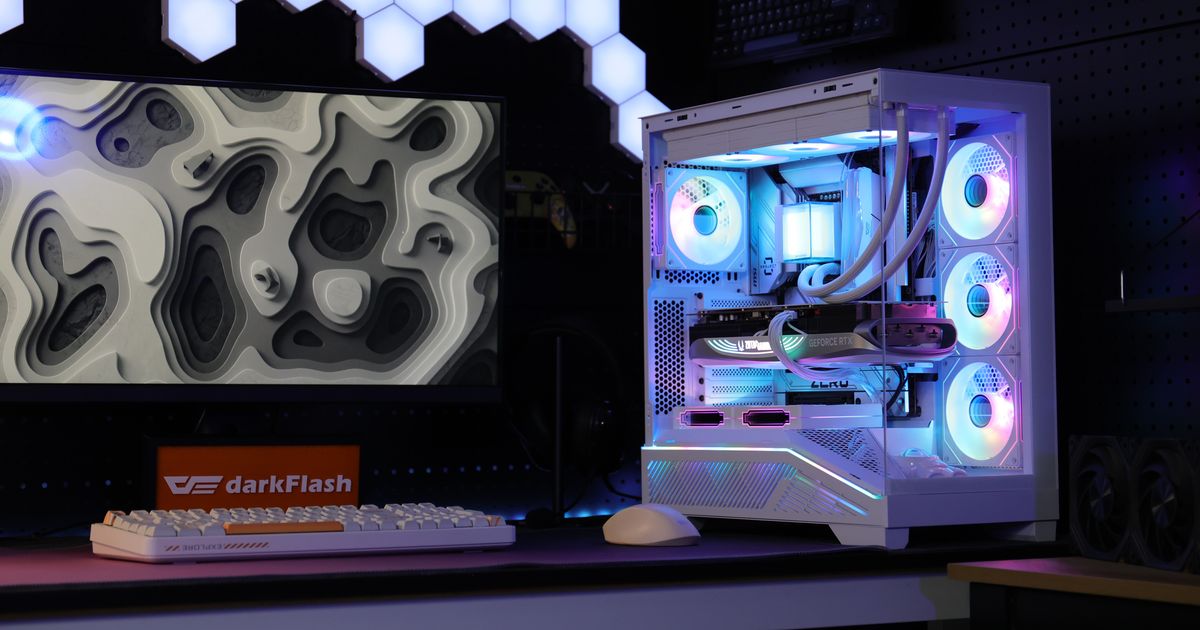
STP/SFTP (Shielded Twisted Pair): These cables feature foil shielding. If your network cable runs alongside power lines inside a darkFlash chassis, a shielded Cat7 or Cat8 cable is essential to prevent data corruption caused by electrical noise.
Is Cat8 Overkill for Gaming?
With a staggering 2000MHz bandwidth, Cat8 is designed for data centers. However, for 2026 enthusiasts:
Future-Proofing: If you are running cables through walls during a home renovation, Cat8 ensures you won't need to rip them out for the next 15 years.
Extreme Low Latency: For competitive eSports, the massive overhead of Cat8 ensures that packet loss due to cable limitations is virtually zero.
Summary: Which Cable Should You Buy?
For the Average Gamer
Cat6a is the "Sweet Spot." It's affordable, flexible, and fully supports 10Gbps speeds.
For AI Professionals & Streamers
Cat8 is the definitive choice. It handles the massive data throughput of local AI model transfers and 8K video streams without breaking a sweat.
The "Don't Buy" List
Avoid Cat5 (not even 5e) and be wary of "fake" Cat7 cables that don't use proper GG45 connectors.