Will floating cases become the future mainstream? Judging by recent fluid simulations, the direction favors them.
Inviscid AI’s simulation shows that after reconfiguring the case airflow around bottom intake, the temperature of the air drawn into the CPU cooler can be up to about 13°C lower than in a traditional front-intake configuration. Bottom intake needs clearance off the ground, which is exactly where a floating design is strongest.
The Blind Spot of Traditional Front Intake
Most cases use front intake with rear and top exhaust, and the baseline configuration in this simulation is three intake fans at the front. The problem is the graphics card: the hot air it exhausts spreads upward and creates recirculation near the CPU cooler.
According to data reported by HKEPC, at a room temperature of 22°C, the intake air temperature at the CPU cooler gradually rises to 35°C, and the intake temperature beneath the graphics card also rises to 30°C.
What Reconfiguring the Airflow Changes
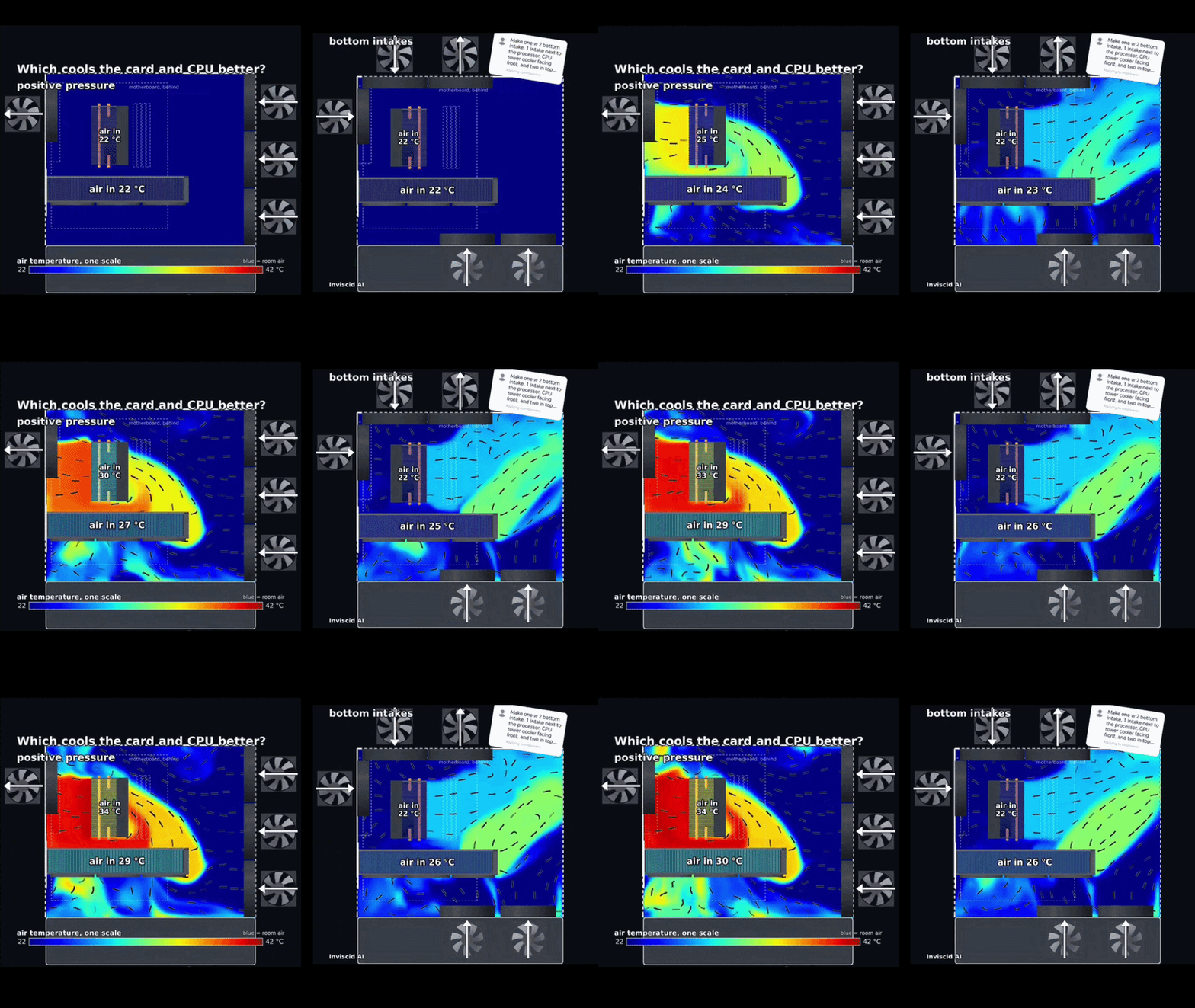
The second simulation reconfigures the airflow around bottom intake, drawing room-temperature air of about 22°C directly from below.
According to Cowcotland, this configuration has 2 fans taking in air at the rear and 1 fan exhausting at the top, with one more fan in total than the baseline. After the reconfiguration, vertical airflow does a better job of carrying the hot air generated by the graphics card toward the exhaust area, reducing recirculation near the CPU cooler.
The simulation results show that the CPU cooler intake temperature drops from about 35°C to 22°C, and the temperature beneath the graphics card drops from about 30°C to 26°C. The 13°C here refers to the temperature of the air drawn into the cooler, not the temperature of the processor itself.
According to reports, this simulation used the open-source tool OpenReynolds, which lets an AI agent operate the OpenFOAM fluid dynamics software.
The Next Step in Airflow Design

(OpenReynolds official website)
This set of simulations points out one thing: the location of the air source and the overall airflow configuration matter as much as the number of fans. Cowcotland notes that the number of cases offering bottom fan mounts is growing, and bottom intake is gradually becoming an option in case design.
However, if the bottom sits close to a desk or the floor, intake space and dust remain limitations. A floating design lifts the case off the ground, giving bottom intake real space, which is its structural advantage in this direction. We believe clearance from the ground and dust protection will receive more and more attention, and floating cases are a design direction worth watching.
FLOATRON F1 Builds Bottom Intake into the Structure
(darkFlash FLOATRON F1 ATX PC Case)
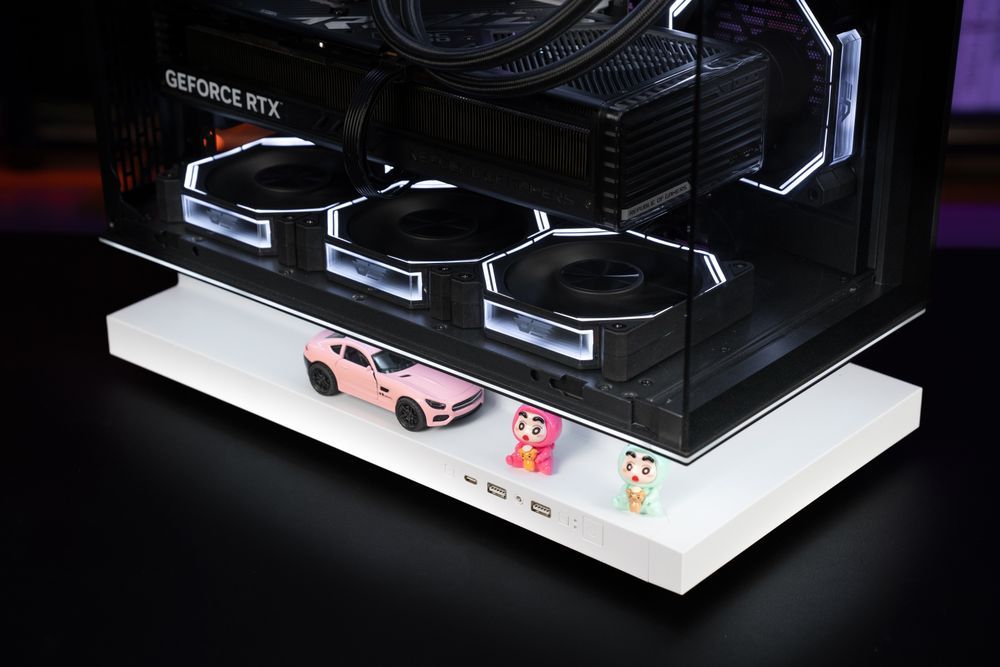
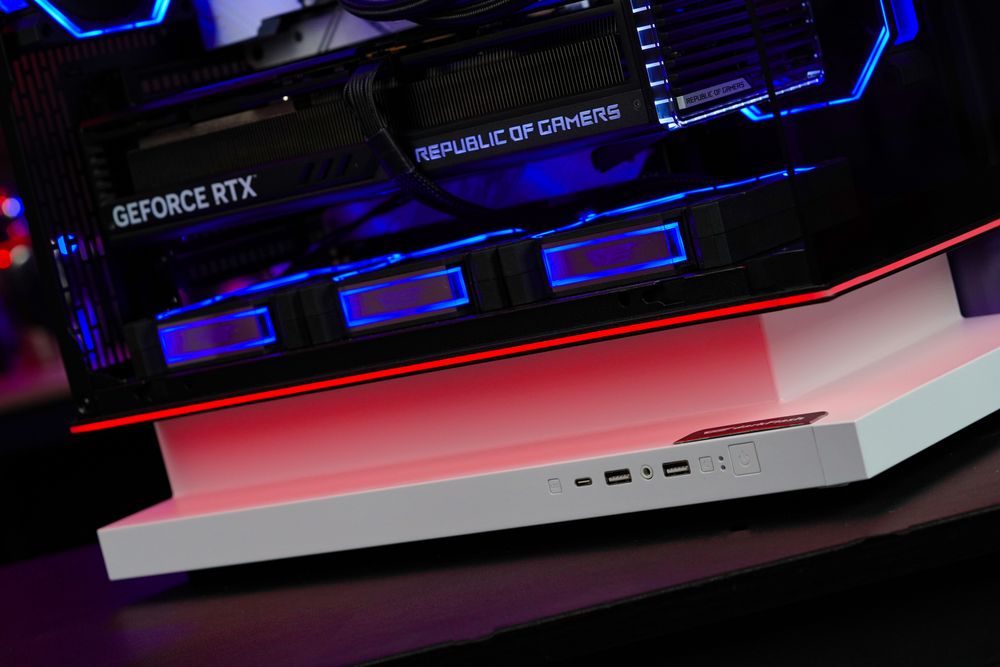
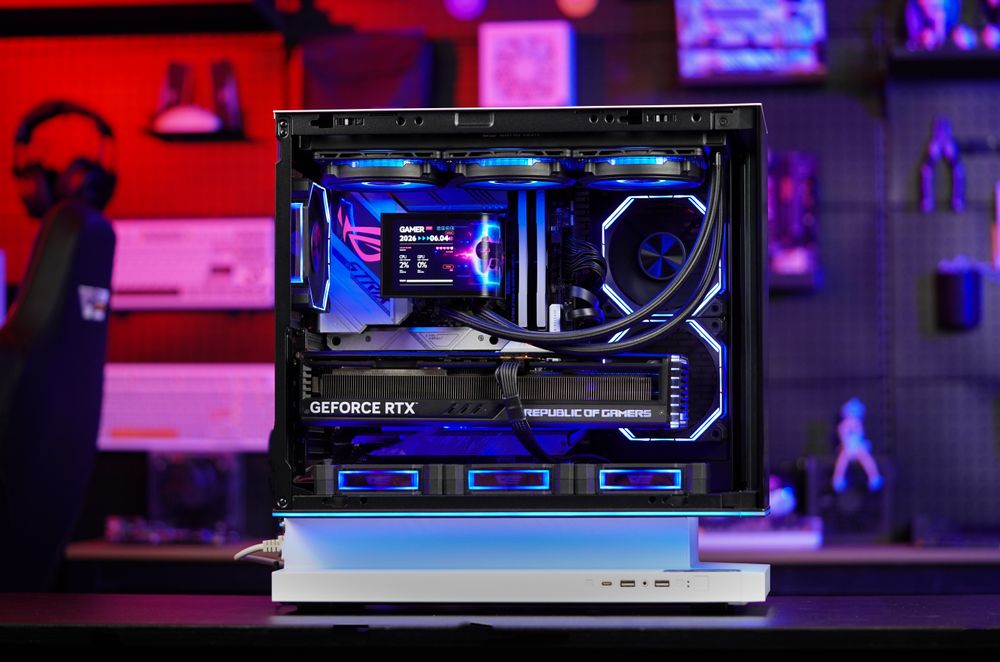
Bottom intake is becoming a new option in airflow design, and the darkFlash FLOATRON F1 is a case that builds this concept into its structure. The floating base creates intake space beneath the chassis, and the bottom supports three 120mm fans, with three pre-installed.
It ships standard with PWM temperature-controlled, ARGB-lit fans, and the top, side, and bottom use magnetic dust filters that can be quickly removed for cleaning. Visually, the floating base doubles as a display platform where you can place figurines or pair it with lighting effects.
Together with a quick-release side panel and back-connect motherboard support, upgrades and maintenance are more intuitive. The FLOATRON F1 M-ATX has also won the Red Dot Award 2026 and the iF Design Award 2026, and was named an honoree of the CES 2026 Innovation Awards (Computer Hardware & Components category).
(darkFlash FLOATRON F1 ATX PC Case)
FAQ
Is bottom intake always better?
The simulation shows that under this configuration, the intake temperature is clearly lower. Actual results will vary depending on the case, components, and fan configuration.
Does the 13°C figure mean the CPU temperature drops by that much?
No. It refers to the temperature of the air drawn into the CPU cooler. The actual drop in CPU temperature will vary with the cooler and the load.
Do the two simulated configurations have the same number of fans?
No. According to Cowcotland, the bottom-intake configuration has one more fan than the baseline.